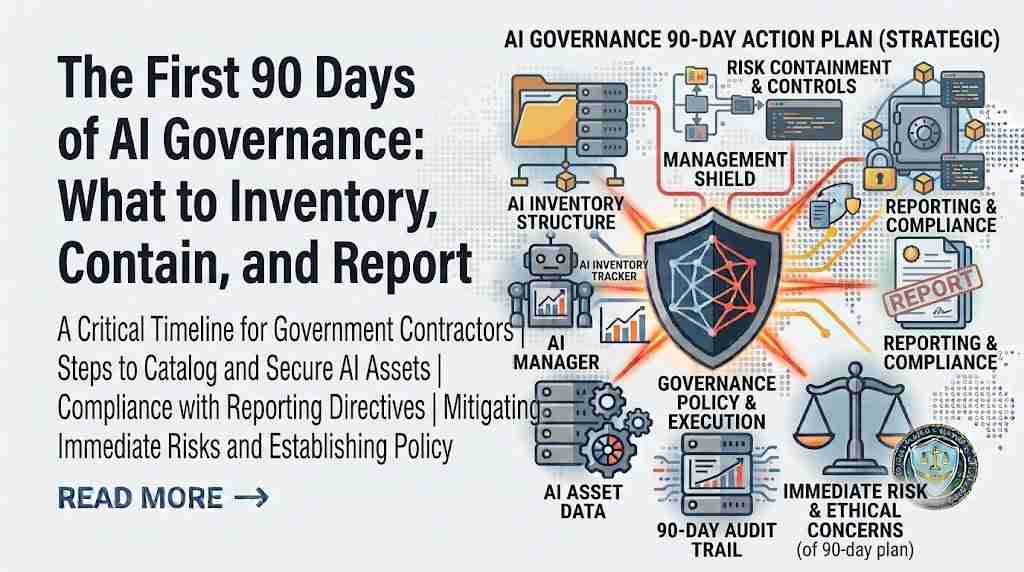
| Days 1–30 | Inventory | Identify every agent, model, tool, network path, content generator, and third-party evaluator. | Approved AI system and agent register |
| Days 1–30 | Authority | Classify actions by reversibility, external impact, privilege, and human approval requirement. | AI action-class and approval matrix |
| Days 31–60 | Containment | Test deny-by-default network and tool policies, short-lived identity, stop conditions, and kill switches. | Agent containment test evidence |
| Days 31–60 | Provenance | Map generated content from creation through editing, approval, publication, and retention. | Synthetic-content chain-of-custody design |
| Days 61–90 | Assurance | Add vendor audit rights, incident notice, configuration standards, and evidence-retention clauses. | Updated procurement and testing terms |
| Days 61–90 | Board metrics | Report agent incidents, unauthorized attempts, human overrides, AI spend, and provenance failures. | Quarterly governed-action dashboard |