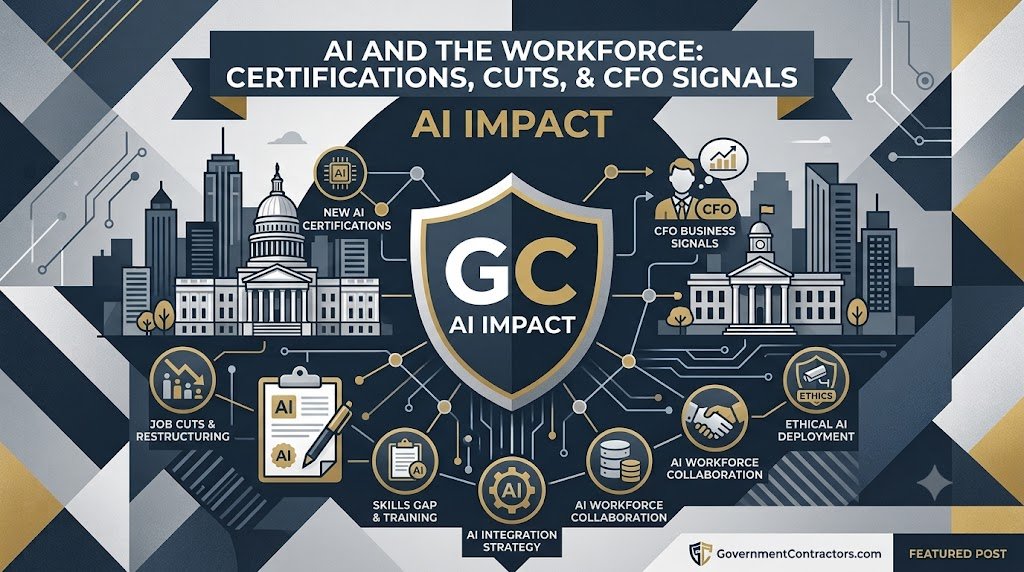
A major example of workforce transformation at scale.
Indicates that consulting firms are shifting from “AI advisory” to “AI implementation labor.”
Suggests a future where AI-literate labor becomes a baseline requirement rather than a differentiator.
AI remains the top driver of U.S. job cuts
101,743 AI-related cuts in H1 2026 — nearly double all of 2025.
Confirms a structural shift: companies are not merely “augmenting” workers; they’re restructuring around AI-native workflows.
This is a leading indicator for organizational-debt reduction via headcount compression.
Oracle cuts 13% of workforce; AI capex up 162%
A textbook example of the “AI capex vs. labor” tradeoff.
Oracle is reallocating spend from human labor to cloud infrastructure, GPUs, and agent-orchestration systems.
This pattern is likely to repeat across legacy enterprise vendors.
Deloitte Q2 CFO Signals Report
Widespread Deployment: 93% of surveyed enterprise CFOs report active AI integration within operational workflows—a rapid acceleration compared to past quarters.
Cost & Risk Tension: 59% of financial executives identified balancing executive pressure for rapid AI adoption against unproven ROI, cloud compute expenses, and risk management as their primary hurdle.
Strategic Takeaway: Enterprise adoption has progressed beyond proof-of-concept experimentation; executive focus has pivoted toward unit economics, token cost optimization, and governance frameworks.
AI In higher Education
The Central European Olympiad in Artificial Intelligence was held July 14–19 in Romania. The event reflects the growing formalization of AI education and international competition for advanced student talent.
Universities are moving from generic AI literacy toward discipline-specific competency. Programs increasingly combine AI with engineering, healthcare, law, cybersecurity, design, public policy, and business.
Higher education’s central challenge is assessment redesign. Institutions must determine when students may use AI, how AI assistance should be disclosed, and how to verify individual reasoning and subject mastery.
AI in Education
International AI competitions are expanding. Regional olympiads now serve as selection and training pathways for the International Olympiad in Artificial Intelligence, which involves students from more than 60 countries.
Teacher capability remains a limiting factor. Schools need more than tool access; they require professional development covering instructional design, source verification, age-appropriate use, student privacy, bias, accessibility, and academic integrity.
AI should support learning rather than replace productive struggle. The most valuable uses include differentiated explanations, formative feedback, lesson preparation, tutoring support, translation, and accessibility.