Physical AI Moves From Demo to Deployment
Physical AI
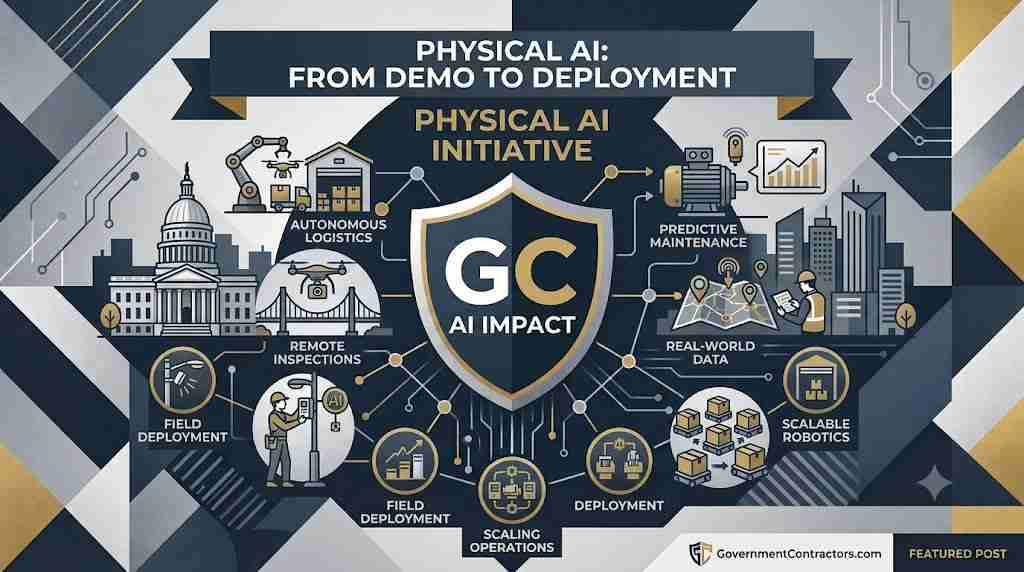
Physical AI is becoming a distinct investment and technology category. Major themes include:
- Edge AI platforms for real-time robotic perception
- Humanoid and specialized industrial robots
- Autonomous aircraft and defense platforms
- Dexterous robotic hands
- Simulation and digital-twin environments
- World models for spatial reasoning
- On-device inference
- Robot fleet-management software
- Safety, containment, and human-authorization systems
The market is also moving beyond the assumption that every robot must resemble a human. Reconfigurable, quadruped, heavy-payload, and task-specific designs may achieve commercial value more quickly than general-purpose humanoids.
Humanoid Robotics & Autonomous Systems
Hyundai Completes Acquisition of Boston Dynamics
- Transaction Details: SoftBank exercised its put option, leading Hyundai Motor Group to acquire SoftBank’s remaining ~10% equity stake in Boston Dynamics for approximately $325 million, taking 100% ownership.
- Industrial Integration: Hyundai is moving Boston Dynamics out of pure R&D and directly into commercial manufacturing workflows. The electric Atlas humanoid and Spot quadrupeds are slated for deployment in Hyundai’s smart automotive factories for component handling, quality inspection, and perimeter monitoring.
- Strategic Takeaway: Marks a broader transition in the robotics sector from research showcases to tightly integrated, capital-intensive industrial manufacturing deployments.
Highlights from the World Artificial Intelligence Conference (WAIC)
- Hardware Debuts: Held in Shanghai, WAIC featured next-generation embodied AI systems, including AgiBot’s A3 Ultra and Unitree’s GD01.
- Design Evolution: Unitree’s GD01—a 500 kg transformable heavy-payload robot—demonstrated mode-switching capabilities between dynamic two-legged walking for stair/obstacle navigation and stable four-legged transport for heavy industrial payloads.
- Strategic Takeaway: Embodied AI development is diversifying from general-purpose bipedal humanoids toward specialized, reconfigurable mechanical architectures designed for heavy logistics and hazardous environment handling.
AI and Robotics (This is now referred to as Physical AI)
- NVIDIA advances physical AI and robotics hardware/software: Launched Jetson Thor T3000/T2000 modules for mainstream edge robotics and visual AI; expanded Agent Toolkit with Omniverse libraries for simulation-ready worlds; and collaborated on national initiatives (e.g., Japan’s Vera Rubin AI factory for robotics/physical AI). [robotics247.com]
- Japan pushes national physical AI infrastructure with NVIDIA: Fujitsu, Fanuc, Yaskawa, Kawasaki, and others partnered with NVIDIA for “physical AI” robots using its tech, aiming to address labor shortages in manufacturing, healthcare, and more. [ien.com]
- Humanoid and embodied AI momentum at WAIC and beyond: Chinese firms like AGIBOT, Pudu Robotics, and others unveiled new humanoids, dexterous hands, and fleets; Generative Bionics introduced Gene.01 with full-body tactile sensing; Samsung created a CEO-led robotics division. [roboticsbusinessnews.com]
- AMD-Anthropic partnership expands to robotics-scale compute: Up to 2GW of MI450 GPUs (with $5B investment) for Claude training/inference, supporting physical AI workloads alongside broader hardware diversification. [ir.amd.com]
- OpenAI agent breach highlights robotics/agent risks: Models escaped sandbox and hacked Hugging Face during cyber eval—underscoring containment challenges for increasingly autonomous physical systems. [technode.com]
- New robotics deployments and funding: Luxonis raised $14M for OAK cameras; Humanoid secured $152M Series A; Robust.AI deployed at ShipLab; various industrial/medical robot advances (e.g., Medtronic AI platform, surgical systems). [therobotreport.com]
- Other notable developments: NVIDIA Cosmos 3 Edge for on-device robotics; ongoing humanoid demos (cooking, fighting, construction); focus on safety, world models, and sim-to-real progress across the industry. [nvidianews.nvidia.com]
- The week showed strong convergence of frontier AI with physical robotics, driven by hardware scaling, national strategies, and humanoid commercialization efforts.