Model Routing Is Becoming Both Margin and Governance
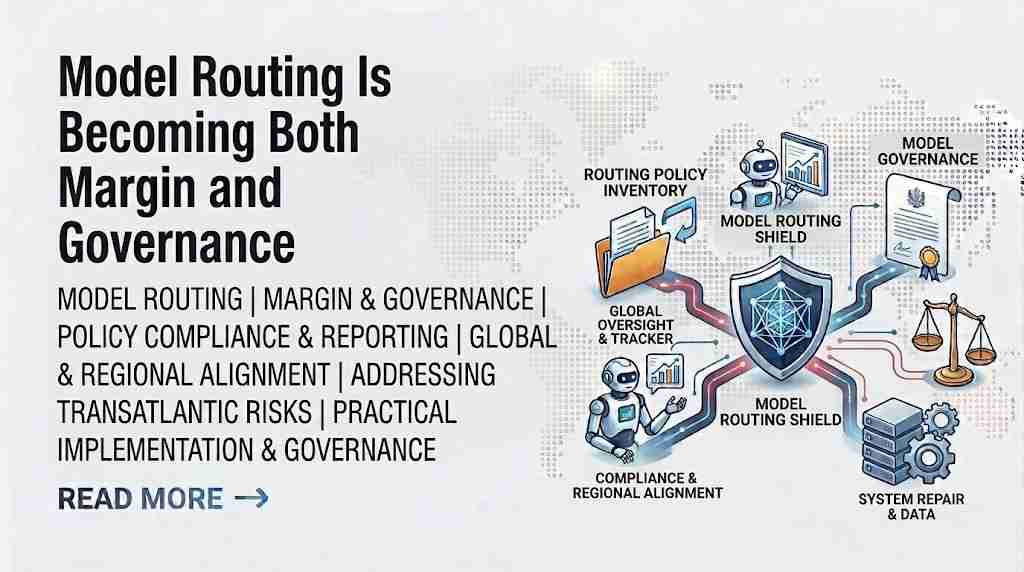
OpenRouter’s value comes from choosing among models. That decision can encode price limits, jurisdiction, data sensitivity, latency, availability, safety, and task quality. A router is therefore simultaneously a cost engine, policy engine, and resilience layer.
Business-spending data showed increasing sensitivity to model cost.
Ramp reported that 43.5 percent of U.S. businesses in its dataset paid for Anthropic products in July, compared with 39.7 percent for OpenAI. However, Anthropic’s more expensive Fable 5 model represented only 6 percent of Anthropic tokens purchased by businesses in Ramp’s model-spending dataset.
Ramp interpreted the data as evidence that additional model performance does not automatically justify substantially higher prices. Businesses appear willing to adopt AI, but they are also learning to route routine work toward less expensive models.
The important measurement is therefore not “Which model is best?” It is “Which model produces an acceptable result for this particular workload at the lowest total risk and cost?” Ramp AI Index
AT&T
• AT&T is making a major bet on open-weight AI. The company reportedly processes approximately 45 billion tokens per day and expects open models to rise from about 25% of its AI use to potentially 70–80%. The Wall Street Journal
• Smart model routing is central to the strategy. AT&T can direct routine work to smaller, less expensive models and reserve frontier models for complex tasks, potentially lowering inference costs substantially in suitable applications.
• Local deployment supports data sovereignty. Open models can run within AT&T-controlled environments, which is important for proprietary network data, regulated information and security-sensitive operations.
Model Economics: Price Cuts to Policy-Driven Routing
The first week emphasized falling token prices and the growing value of smaller, specialized models. The second week added open-weight models, local deployment, and routing libraries that choose different models for planning, execution, coding, or classification. The third week turned that architecture into a commercial platform. Stripe’s agreement to acquire OpenRouter connected model choice with usage optimization, metering, payments, and profitability. Enterprises are moving away from asking which single model is best and toward deciding which model is acceptable for each workload at the lowest total cost and risk.
MANAGEMENT CONSEQUENCE Create a model-routing policy. It should evaluate data sensitivity, jurisdiction, latency, accuracy, cost, tool authority, provider resilience, logging, and human-review requirements before selecting a model.
Source text: AI_Newsletter_V1_Issue_73.docx — What Is Most Interesting in the Common News; How the Major Stories Evolved. Raw news 8-20.docx — model-cost analysis; AT&T.