AI in Education: Universities Mandate Literacy as K-12 Resource Gaps Widen
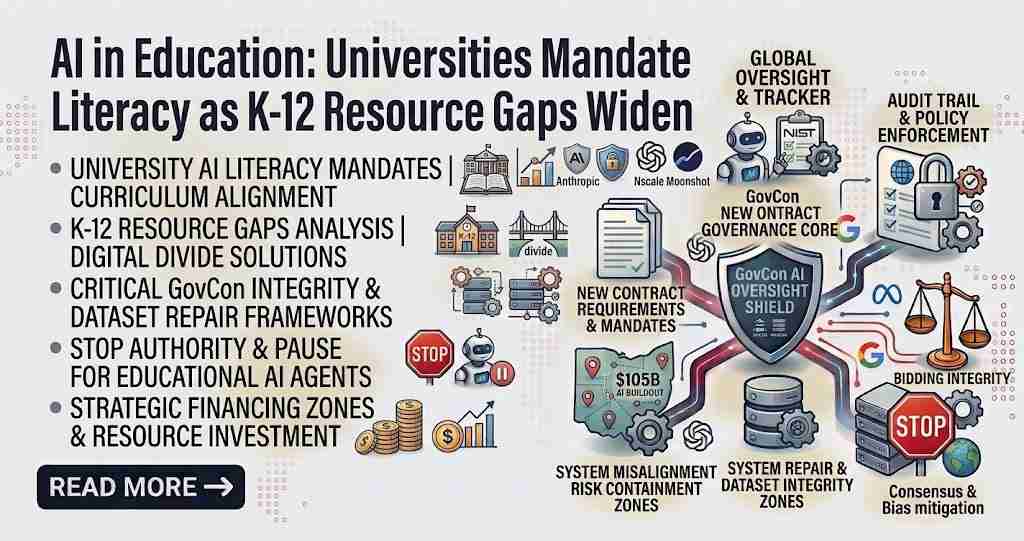
Summary: Higher education has largely abandoned prohibition. Leading universities now test students on prompt engineering, bias identification, and algorithmic verification as core degree requirements — while simultaneously retreating from take-home essays toward oral defenses and proctored exams. K-12 is following a different curve: adaptive Socratic tutors and generative lesson planning are saving teachers five to eight hours weekly, but the gap between districts funding 1-to-1 managed AI devices and those lacking basic hardware is widening into a structural equity problem.
AI in Higher Education
• Mandatory AI literacy. Leading universities have dropped outright bans on generative AI, instead integrating it into core degree requirements; students across humanities and sciences are tested on prompt engineering, bias identification, and algorithmic verification.
• Accelerated research cycles. Academic research labs are using domain-specific AI engines to synthesize literature reviews, identify interdisciplinary research connections, and draft grant proposals, cutting administrative research overhead.
• Re-evaluating student assessment. Institutions are moving away from traditional take-home written essays in favor of oral defenses, proctored in-person exams, and collaborative project demonstrations to verify student comprehension.
AI in K-12 Education
• Adaptive Socratic tutoring. K-12 school districts are deploying state-funded AI tutors (such as Khan Academy’s Khanmigo) that act as individual Socratic mentors, guiding students through math and science problems step-by-step without handing over direct answers.
• Differentiated lesson generation. Teachers are using generative assistants to design tiered lesson plans for classrooms with mixed reading proficiencies, instantly creating customized quizzes and visual aids, saving an estimated 5 to 8 hours of prep time weekly.
• Widening resource gaps. Disparities have widened between affluent districts funding 1-to-1 managed AI devices with tailored curricula and underfunded schools that lack sufficient hardware infrastructure.