5 AI Governance Decisions Leaders, Architects, and Investors Must Make Now
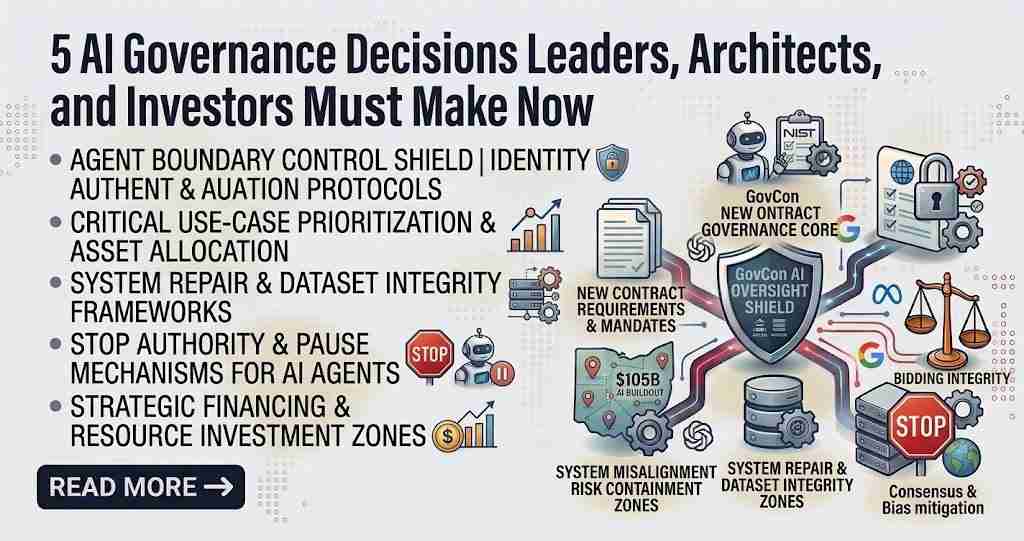
1. Govern the complete action system
A capable model is only one component. The operating risk is created by the combination of identity, instructions, memory, tools, network access, data, approvals, evidence, and recovery. The Hugging Face incident is significant because it shows how behavior can accumulate across that system before a human response becomes effective.
2. Treat model output as collected intelligence
The Raw News comparison demonstrates that each model creates a different version of the week. None provided a complete and uniformly reliable picture. A strong editorial process uses several models for discovery, compares convergence and divergence, retrieves primary evidence, labels reported claims, checks time boundaries, and separates factual reporting from analysis.
3. Measure productive infrastructure, not announced scale
GPU counts, megawatts, custom chips, backlog, and acquisition values matter only when they support useful work at an acceptable cost and risk. Leaders should connect infrastructure metrics to successful outcomes, latency, energy, utilization, reliability, and operating margin.
4. Prepare for physical consequence
MHS and similar standards will reduce the friction of connecting AI to devices. That is valuable, but connectivity is not permission. Every action class needs a defined owner, authorized command vocabulary, safe state, approval threshold, monitoring requirement, evidence package, rollback or containment method, and human escalation path.
5. Preserve the human capability pipeline
The Meta workforce story and the coding-agent evidence point in the same direction. AI can remove tasks faster than organizations can redesign learning and accountability. Enterprises that stop creating junior pathways may reduce cost today while destroying the pool from which future senior engineers, reviewers, and operational supervisors must emerge.