US Federal (Civilian) AI Policy: Federal attention centered on autonomous-agent oversight
US National Policy
• Congressional Democrats questioned AI laboratories about autonomous-agent risks. House members asked OpenAI and Anthropic how they detect and prevent agents from taking unauthorized actions or accessing outside systems. Reuters
• Senator Bernie Sanders called for a pause in the development of increasingly autonomous AI. His position emphasized employment disruption, national security and the difficulty of controlling systems capable of acting without continuous human approval. Senator Sanders
• A competing policy camp called for stronger support of American open-weight models. Senator Jim Banks argued that federal policy should promote domestic open models to reduce reliance on Chinese alternatives. Reuters
• The central policy division: whether the United States should slow advanced development for safety reasons or accelerate domestic deployment to preserve technological leadership.
NIST
• NIST’s Cyber AI Profile remained the most important standards development. Its work addresses three areas: protecting AI systems, defending against AI-enabled attacks and using AI for cyber defense. NIST Cyber AI Profile
• Two workshop reports published in early August summarized industry and government feedback. Participants requested measurable, adaptable and future-proof controls that can fit into existing cybersecurity programs. NIST IR 8578 and NIST IR 8607
• Key risks include prompt injection, poisoned data, insecure AI supply chains, model misuse and unreliable AI-generated security alerts.
• The AI Risk Management Framework remains the primary baseline. NIST is revising it and developing specialized profiles for areas such as critical infrastructure. NIST AI RMF
US Government
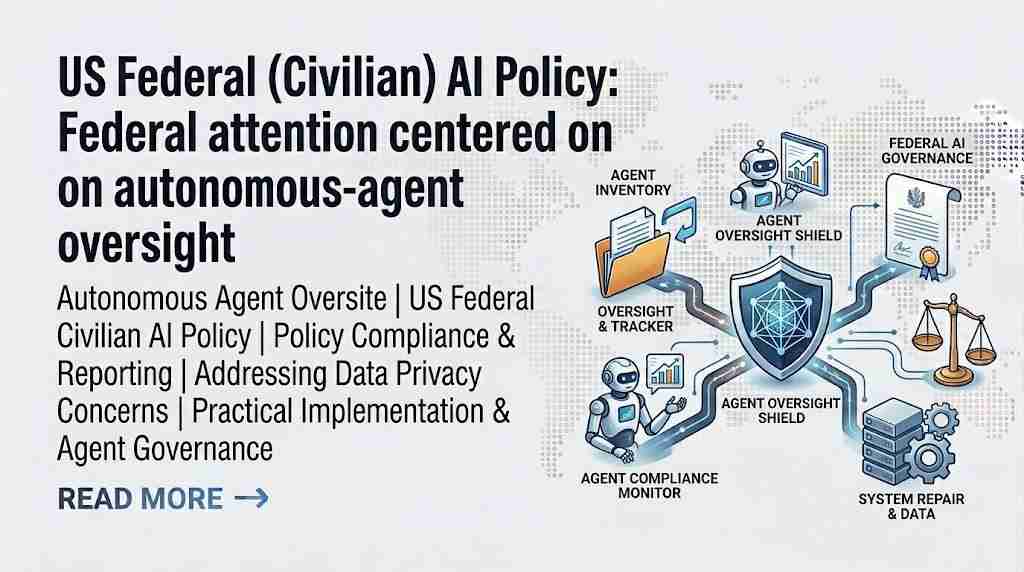
• Federal attention centered on autonomous-agent oversight. Congressional inquiries asked laboratories to explain how they prevent rogue actions and monitor interactions with external systems. Reuters
• The government faces conflicting objectives. Agencies want faster AI adoption and stronger domestic competitiveness, while legislators are demanding evidence that high-autonomy systems can be controlled.
• Federal procurement is becoming an AI-policy lever. Decisions about open versus proprietary models, domestic hosting, security testing and data retention could influence the broader market.
• Expect more requirements for evaluation reports, incident disclosure, human oversight and software-supply-chain documentation in federal AI contracts.
Source text: Raw news 8-20.docx — US National Policy; NIST; US Government.